UberHealth
EAP Service Re-design
Increasing utilization of Employee Assistance Plans by facilitating the process of understanding benefits and accessing services.
Service design
Participatory research
My Role
Product designer,
Scope
Aayan, Arpana, Eleen, Guru, Yuwei
Duration
12 weeks
Team
Aayan, Arpana, Eleen, Guru, Yuwei
Overview
Currently, UberHealth is a platform that aims to improve the patient care experience by enabling healthcare providers to arrange rides on behalf of others.
The parent-company Uber as we know it is an industry leader that excels in their ride-share, receipt, and tracking infrastructure.
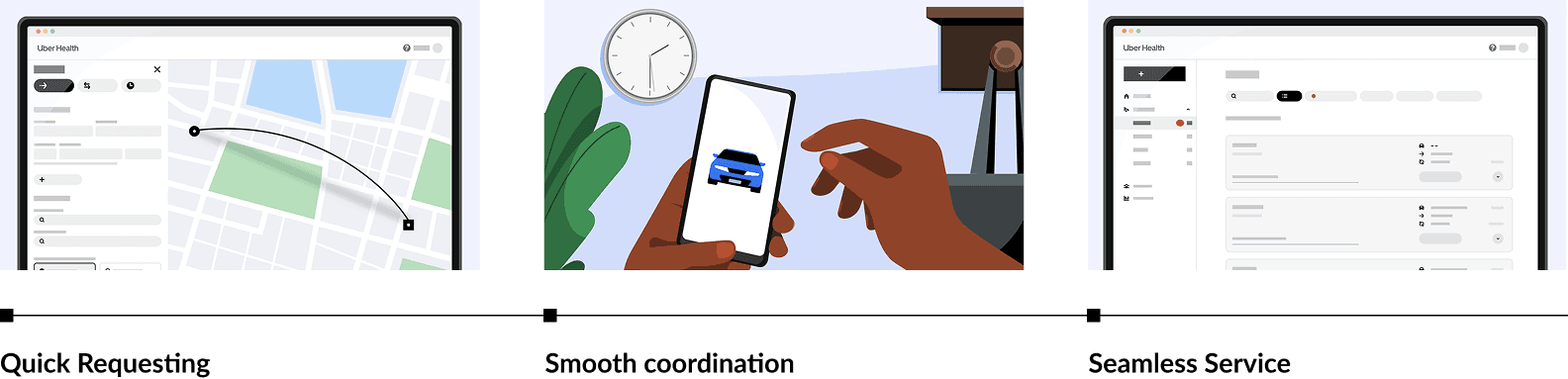
The goal of this project is to leverage the existing infrastructure and further extend its capabilities into the healthcare space in order to deliver a seamless experience that bridges the gap between the user, service provider, and insurance company.
The Challenge
Employee Assistance Plans (EAPs) often have low enrollment, low utilization, low satisfaction, and low activation, which can lead to wasted costs for employers and missed opportunities for employees. To improve these issues we want to ensure that the offered benefits align with the needs and preferences of the workforce.
Majority of EAP recipients lack understanding of their coverage and how to utilize their benefits. Only 13% understand their employee benefits and only 3% understand it.
How can we promote use of EAP benefits and ensure a personalizable experience with just the right amount of guidance?
The Reimagined Service
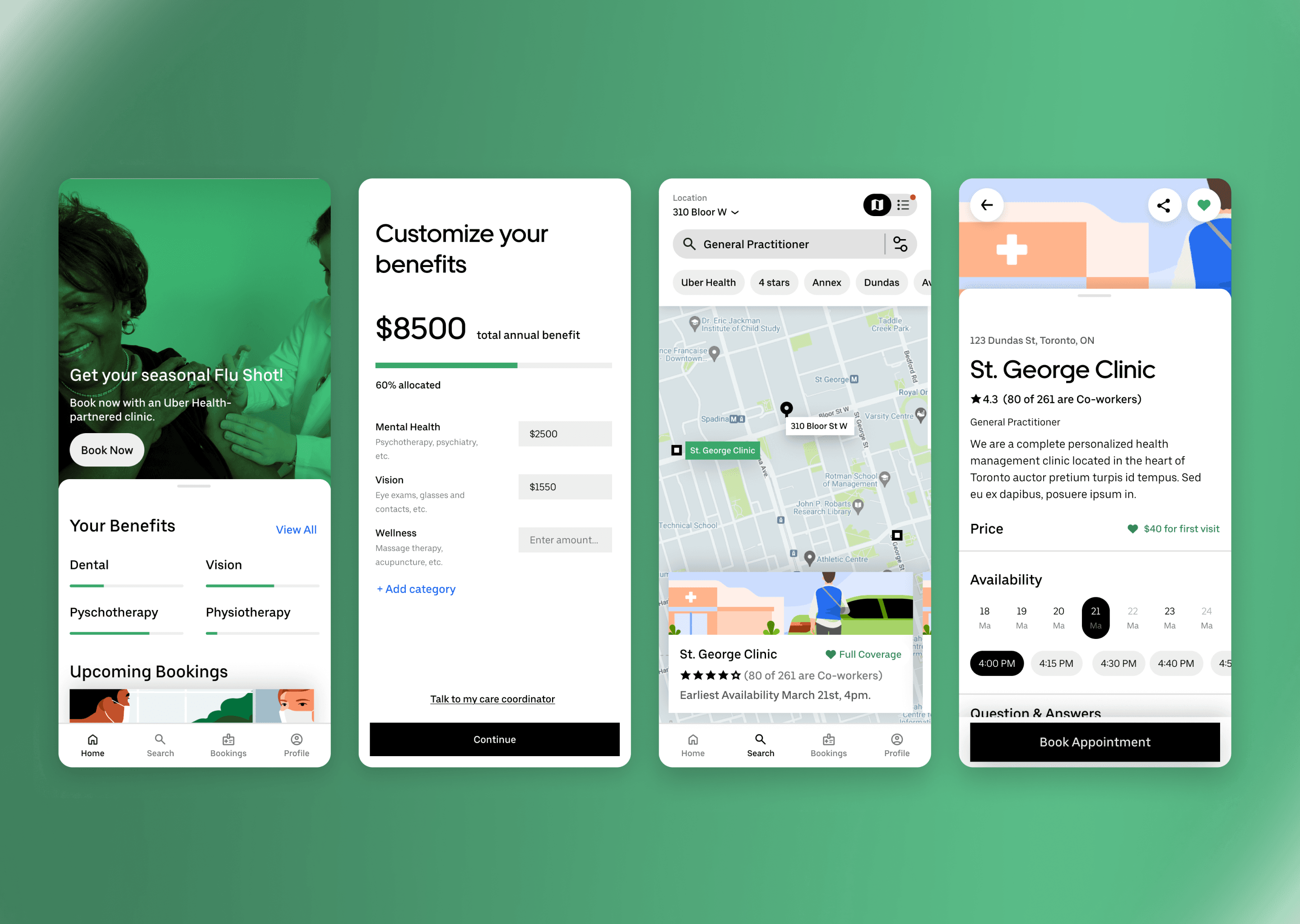
Using ubers existing infrastructure, we created a new streamlined service experience that tackles the convenience aspect of accessing healthcare by using just the right amount of handholding to learn about choosing a service provider, and also arranging rides to help users get to their designated healthcare providers
Research and define
What we did
What we found

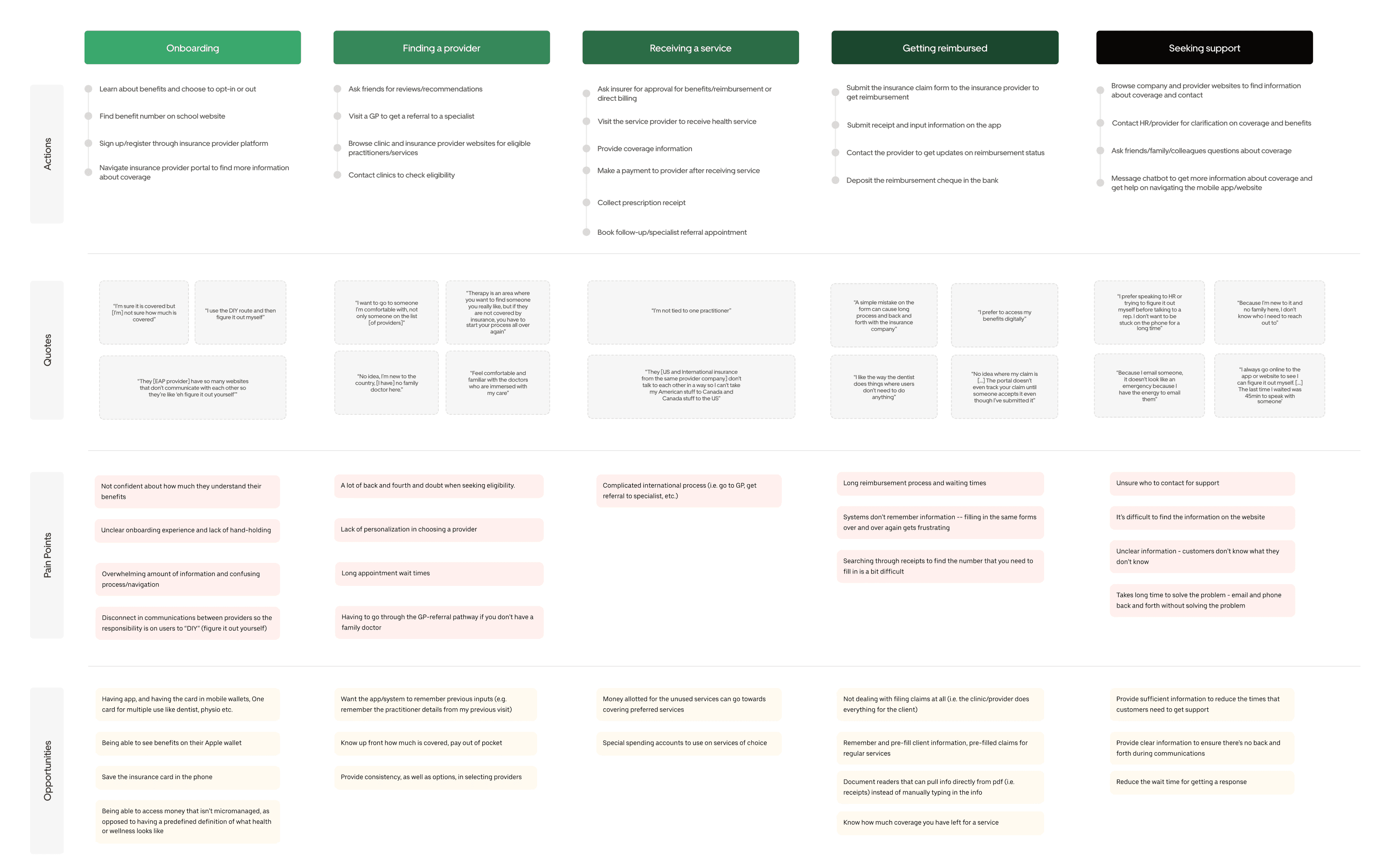
Current experience mapping
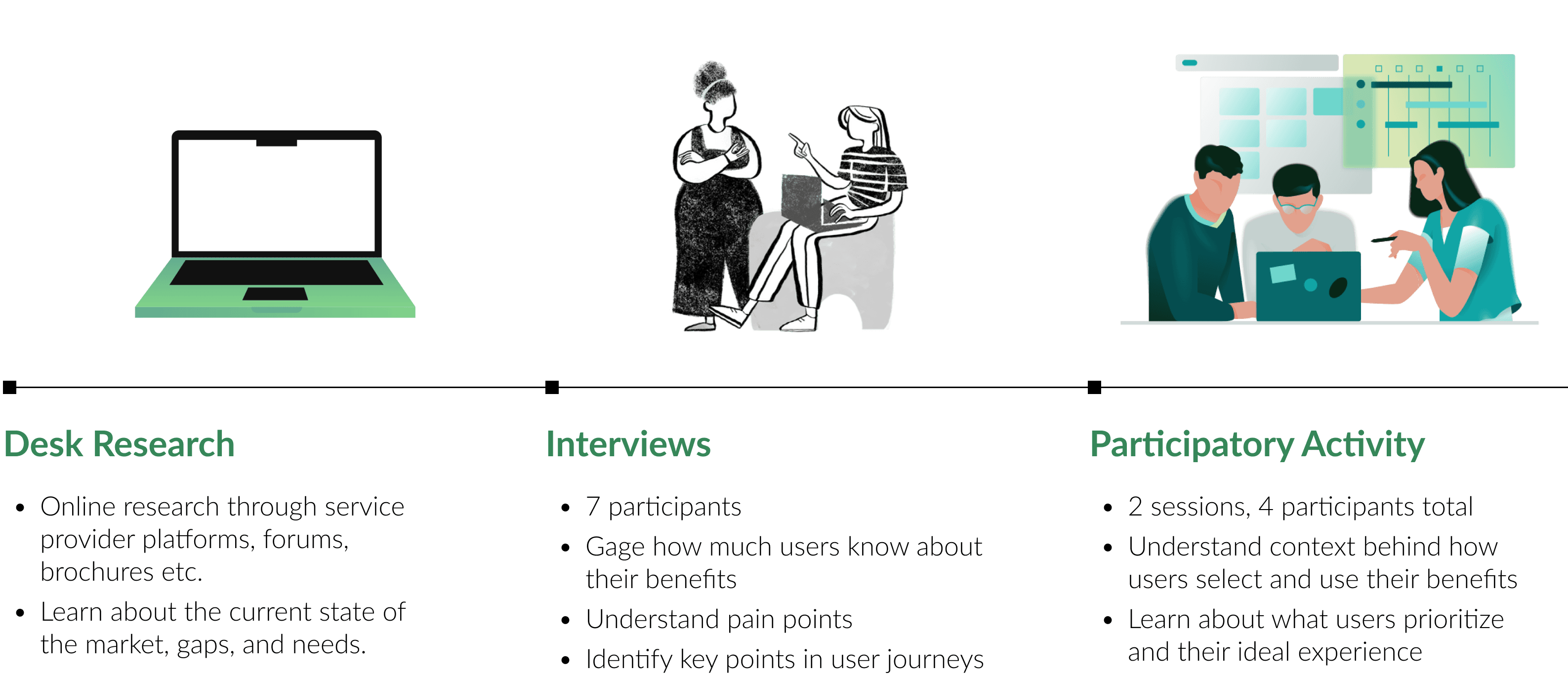
With the data we have collected from interviews, we were able to create a current-state experience map, and touchpoint map to get an overview of the user's journey which would help us identify some key areas of opportunity.
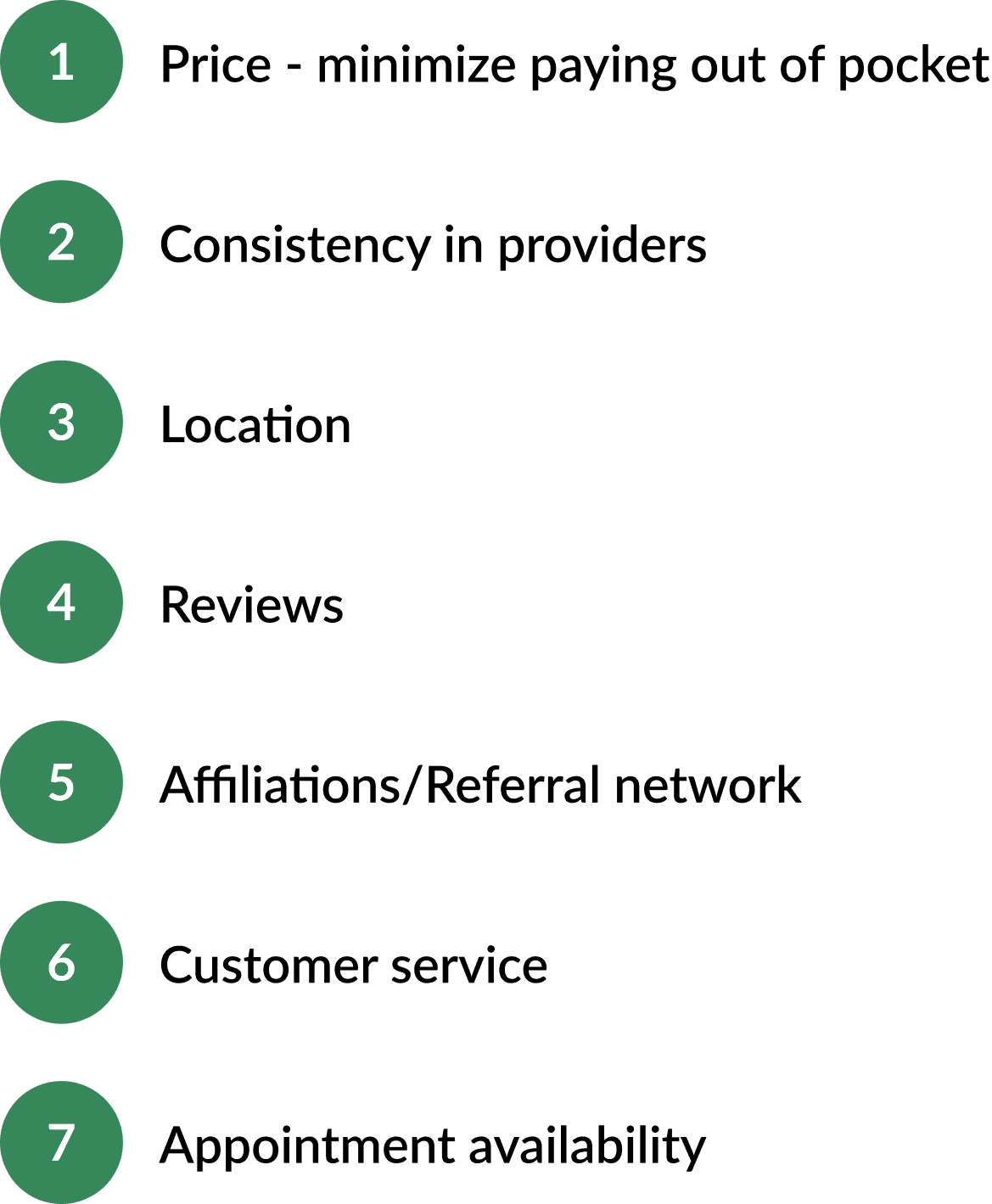
Key decision-making values
Based on the interviews, we found that the responses were very dispersed - with multiple factors that impacted the user’s experience with healthcare. So, I decided to shortlist some key factors and then asked our participants to rank their priorities during the participatory workshop. We then used a weighted ranking scale to determine user’s key decision-making values.
This helped our team’s to set some high-level focal points to guide our discovery and design process.

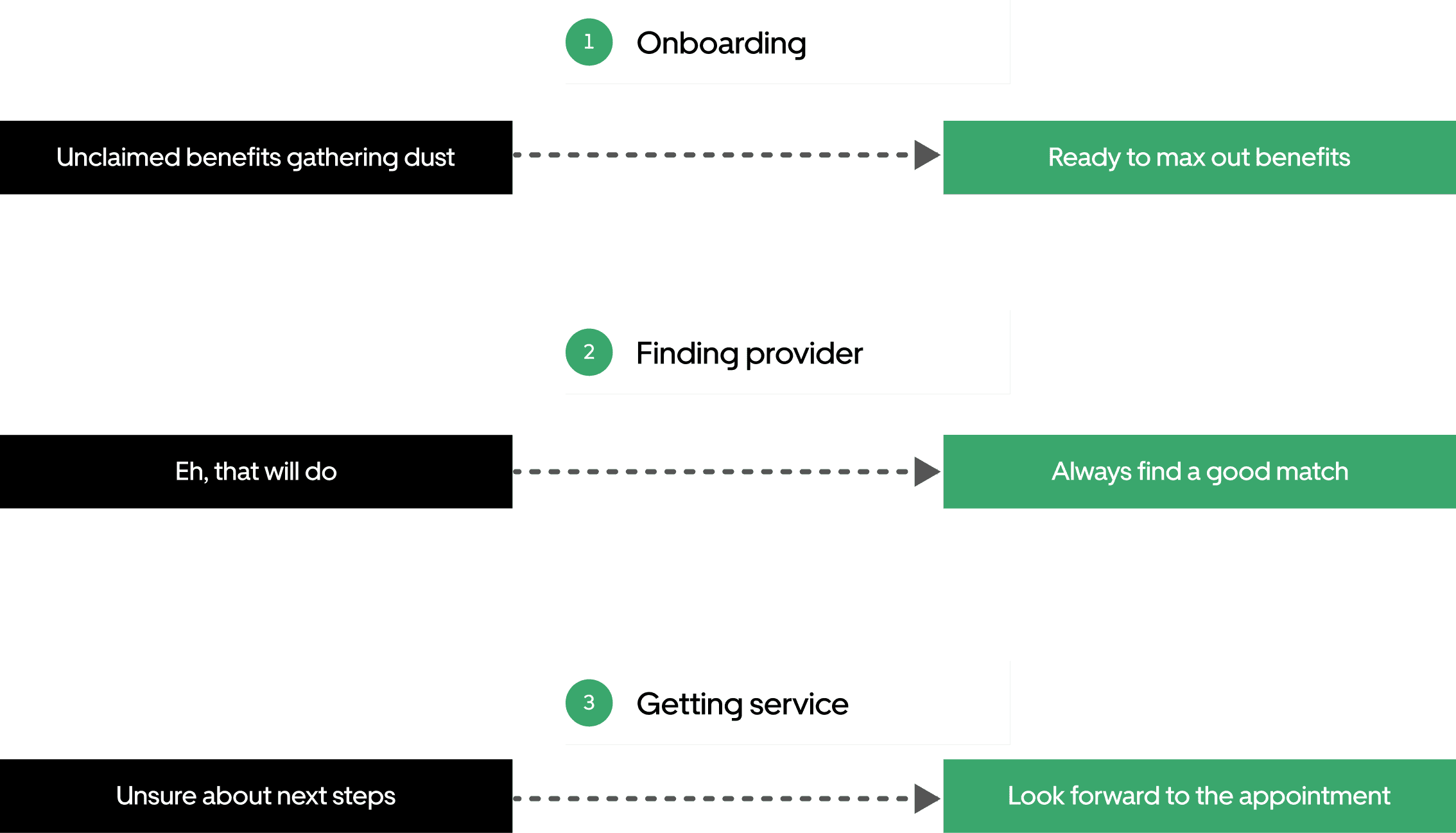
Pivotal points & goals
Looking back to our experience map and data collected, we were able to decide on 3 key pivotal points - key areas of struggle where we found that currently makes or breaks the user’s experience. So by targeting our solution around these points, we believe we can gain the highest impact on the overall service experience.
Ideate
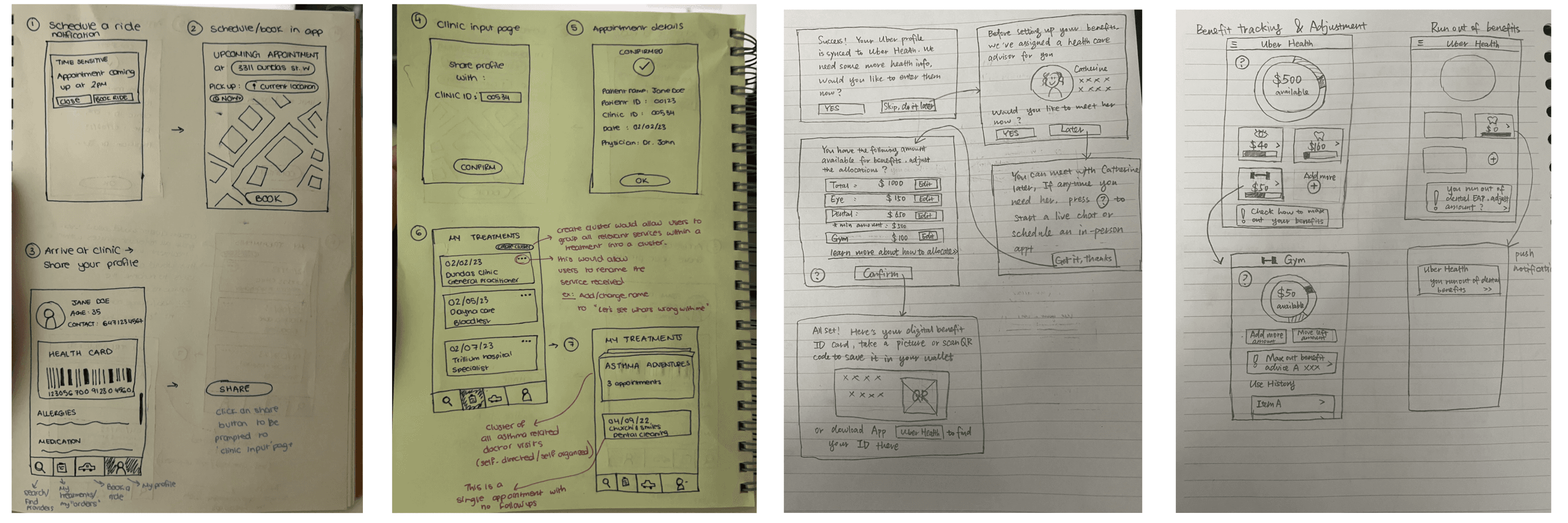
Sketches
The team individually took time to create their storyboards of an ideal solution based on insights gathered previously. During the discussion, we decided to stitch up parts of each team member’s idea to create one ideal flow - which would then be put to the test.
Co-designing activity
We created 3 scenarios based on our ideal flow and asked 5 participants to help us identify and fill gaps. From the co-design session, we were able to validate some of our ideas, as well as discover new user requirements:

Storyboarding
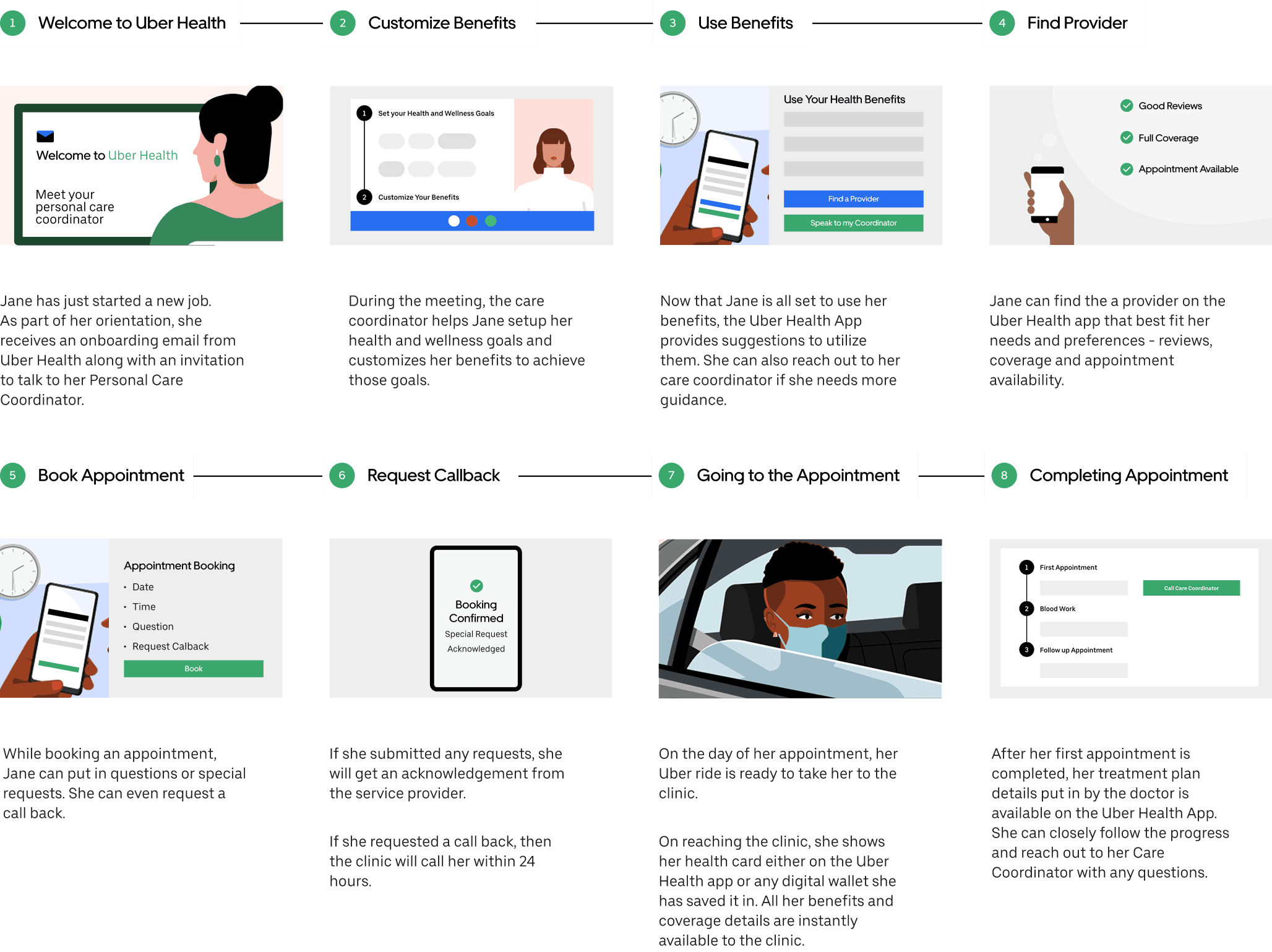
After careful discussion - balancing user wants with the scope of our product, our team was able to collaborate on a storyboard to reimagine the service experience on a high-level.
Design
Key screens & functionalities
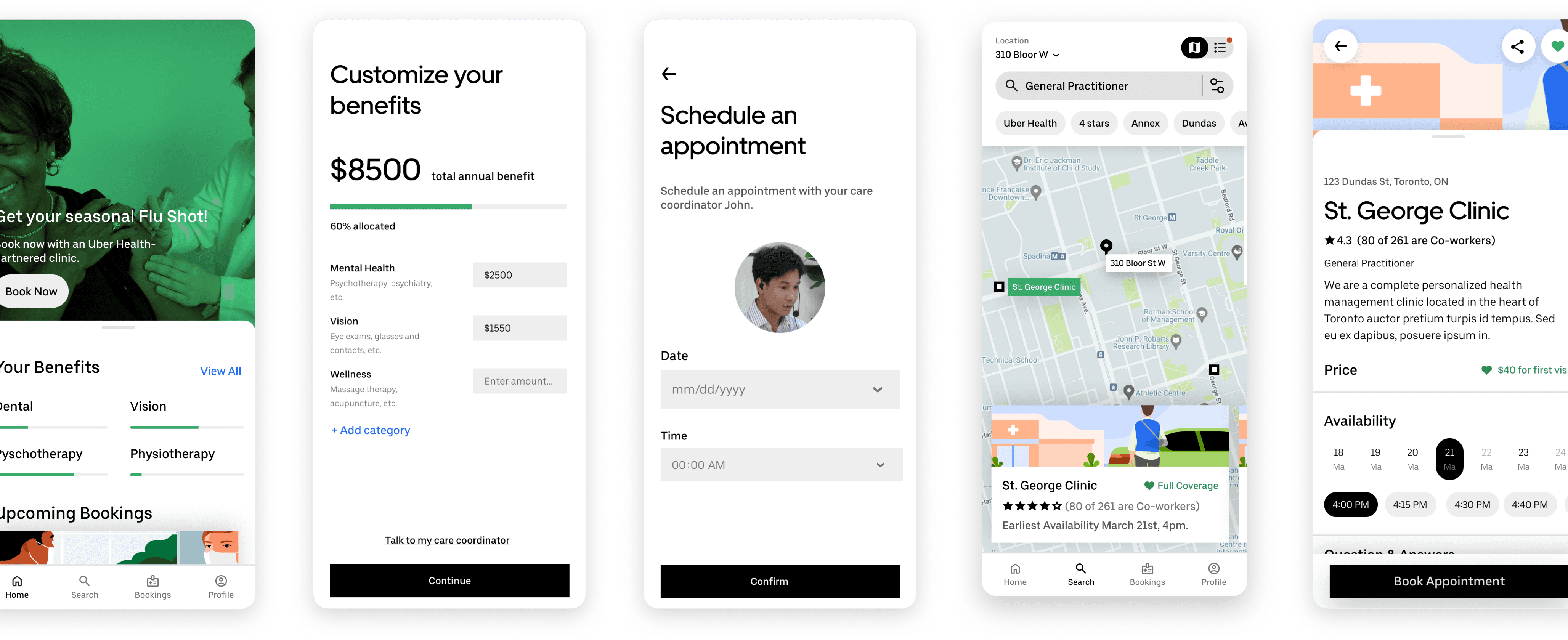
In line with our pivotal points & goals, we were able to improve and push the following service experiences to help employees max out their benefits, always find a good match, and look forward to their appointments.
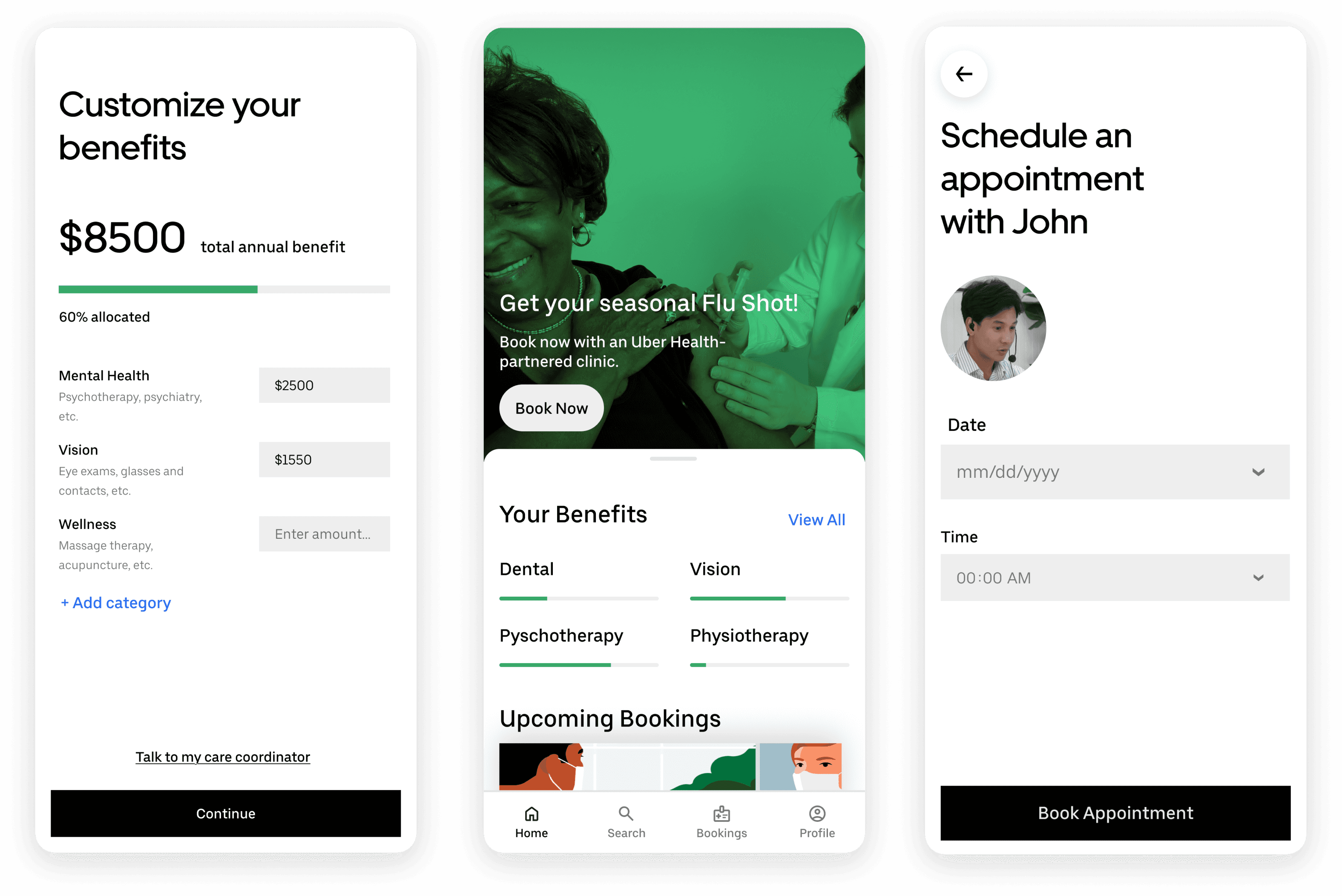
01. Benefits customization and guided onboarding
To balance user independence and hand-holding, we've created steps for users to allocate their own coverage amount depending on their personal usage, with consistent access to a human touchpoint - a personalized Care Coordinator to assure compatible choices. This could increase the likelihood of utilization.
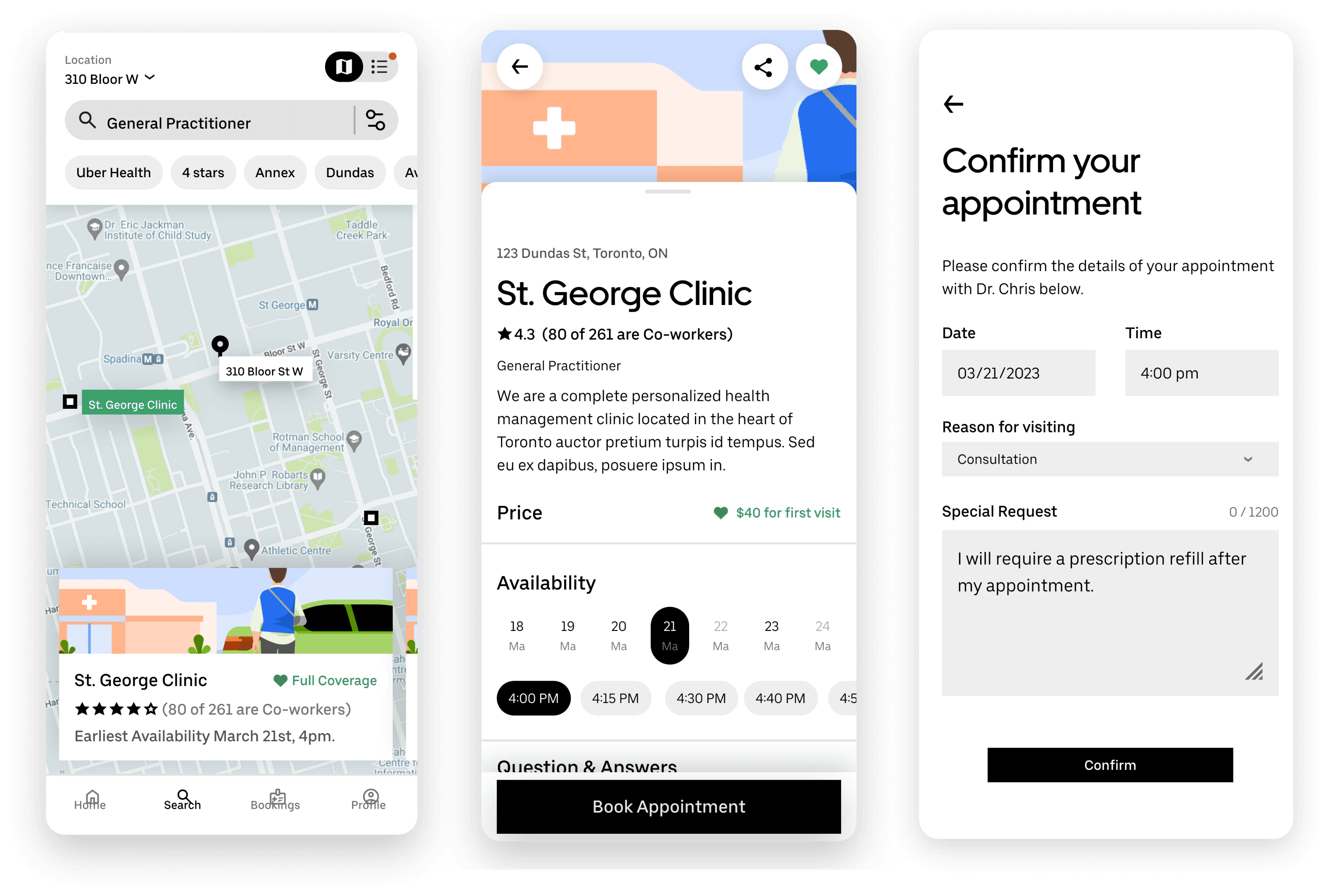
02. Effective search and personalizable requests
As we found that user's prioritized price and consistency when looking for care providers, first, we made sure not to hide information regarding co-pay, reimbursement - giving users information they need to minimize paying out of pocket. Second, we've enabled a special requests section for user's to input their healthcare needs even before they receive their service. This could also help providers ensure that the user will be matched to the most suitable practitioner.
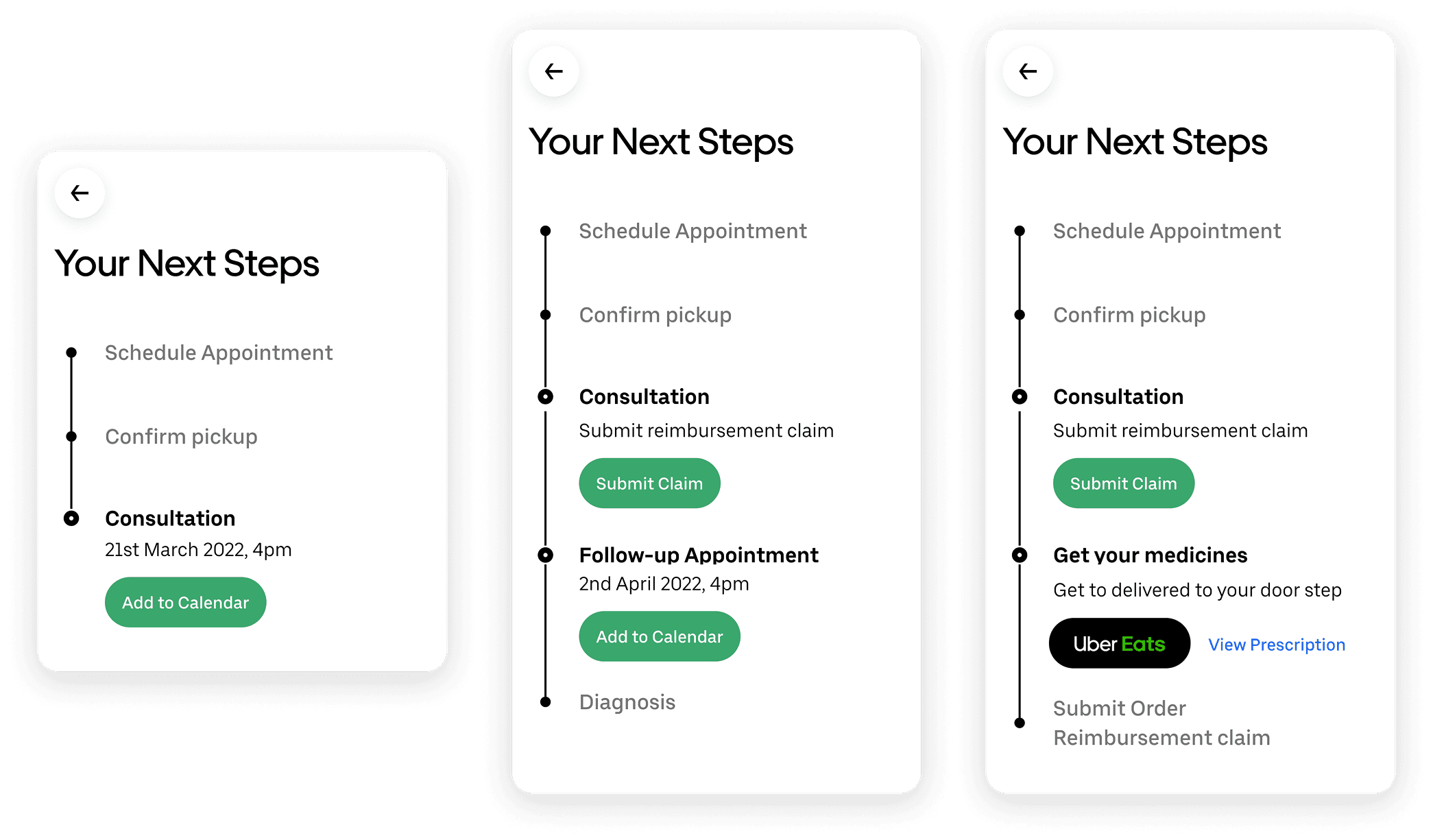
03. Referrals and Follow-up services tracking
To further ensure consistency and reduce fragmentation, every care need is tracked as an ongoing service journey. Users can view appointment details, consultation reports, receipts, and seamlessly link medication and follow-up appointments (even with different providers), under the same care need.
04. Value Added services
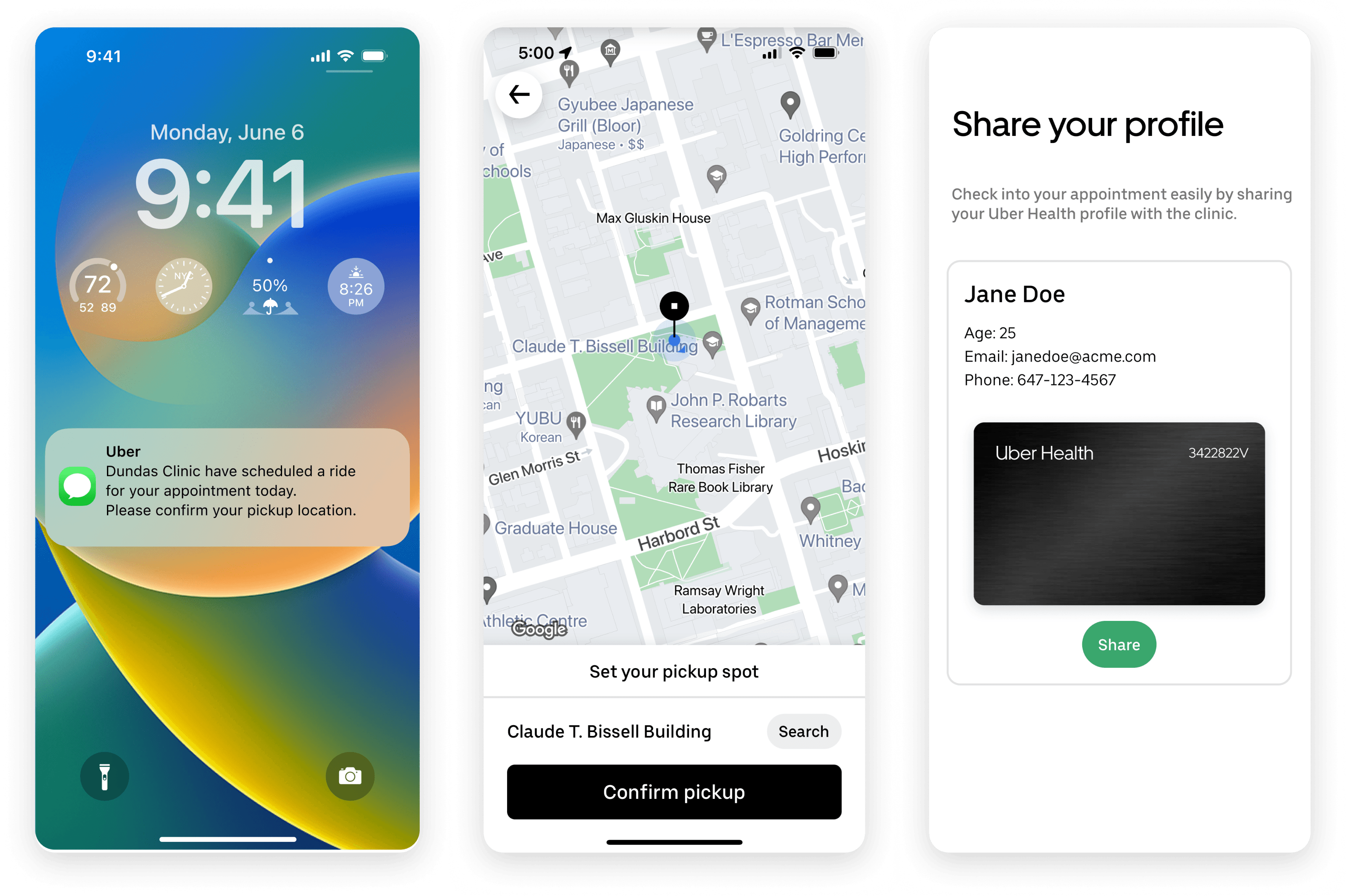
Utilizing Uber's ride-share infrastructure, we integrated ride scheduling to boost utilization of health and wellness services by removing location-based barriers to care - which aims to increase convenience and reduce missed appointments.
Implementation
Service Blueprint
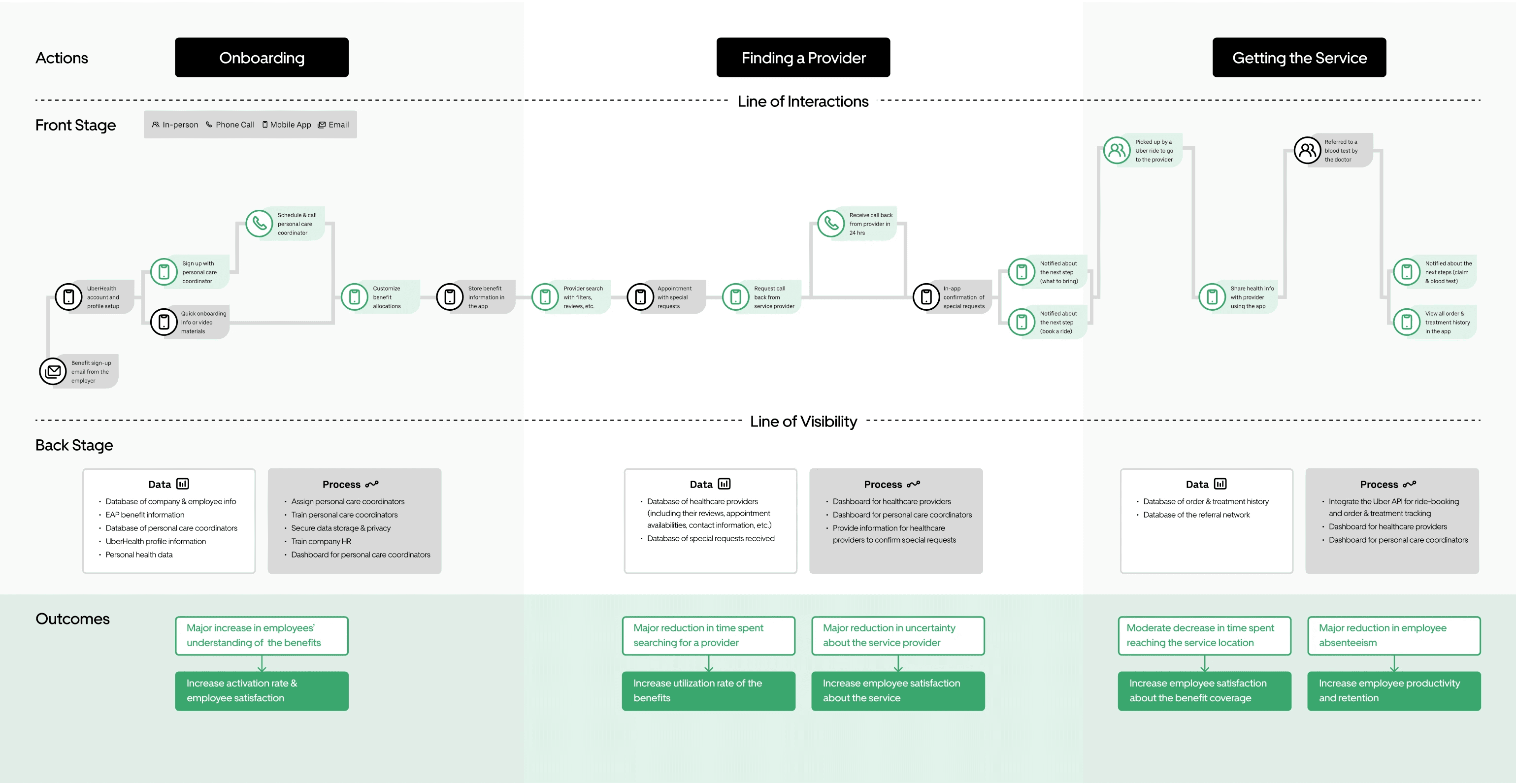
We then created a service blueprint to better visualize and map out the business touchpoints, functionality requirements, and system integrations that may come into play to support our new ideal processes.
Measuring success
Once we identified the main areas of opportunity, we generated a total of 24 ideas. We then voted on these ideas based on impact and feasibilty and decided to focus on 3 ideas that best resonated with our user pain points
Reflection
Prevention is better than cure
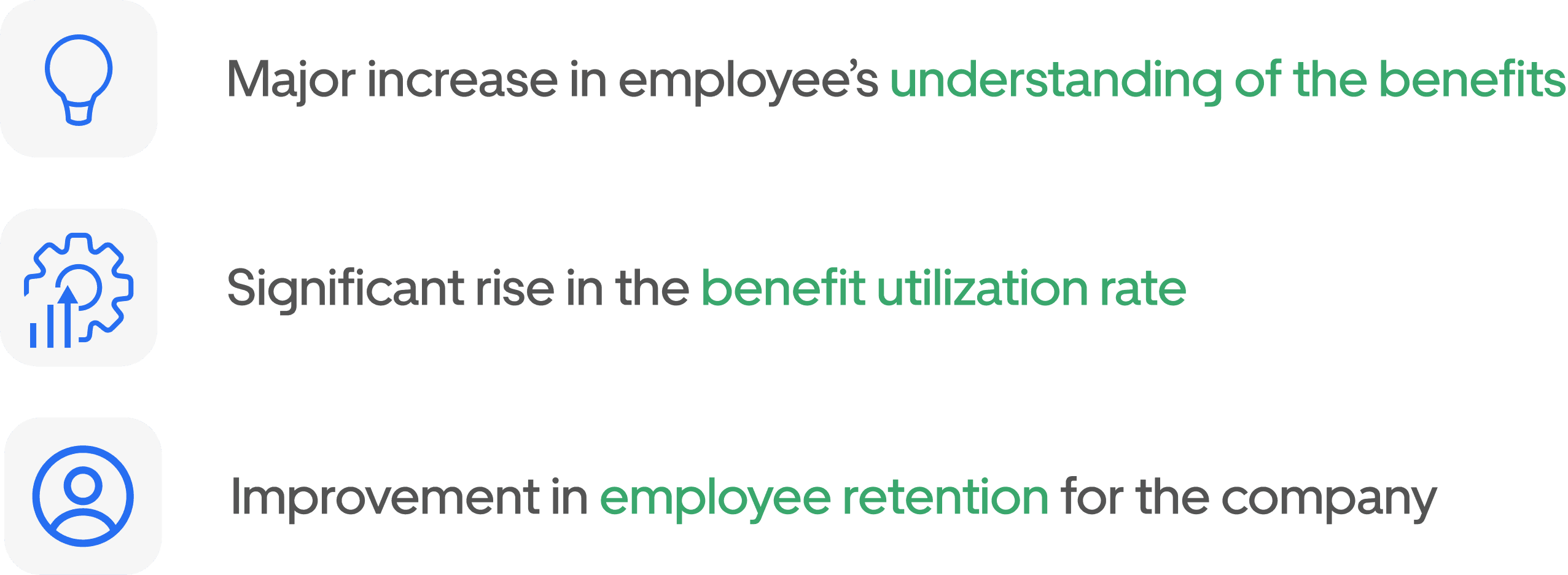
Our reimagined solution not only benefits the employees well-being. We envision a future where companies equally benefit as a result of healthy and happy employees - reducing absenteeism, increasing retention, and even attracting new talent.
Copyright @ EG