XO.Market
Conviction market
An open, creator-driven platform giving all users the tools to trade, share, and collaborate.
Product Strategy
UX & UI Design
Design systems
My Role
Scope
Tools
Duration
Context
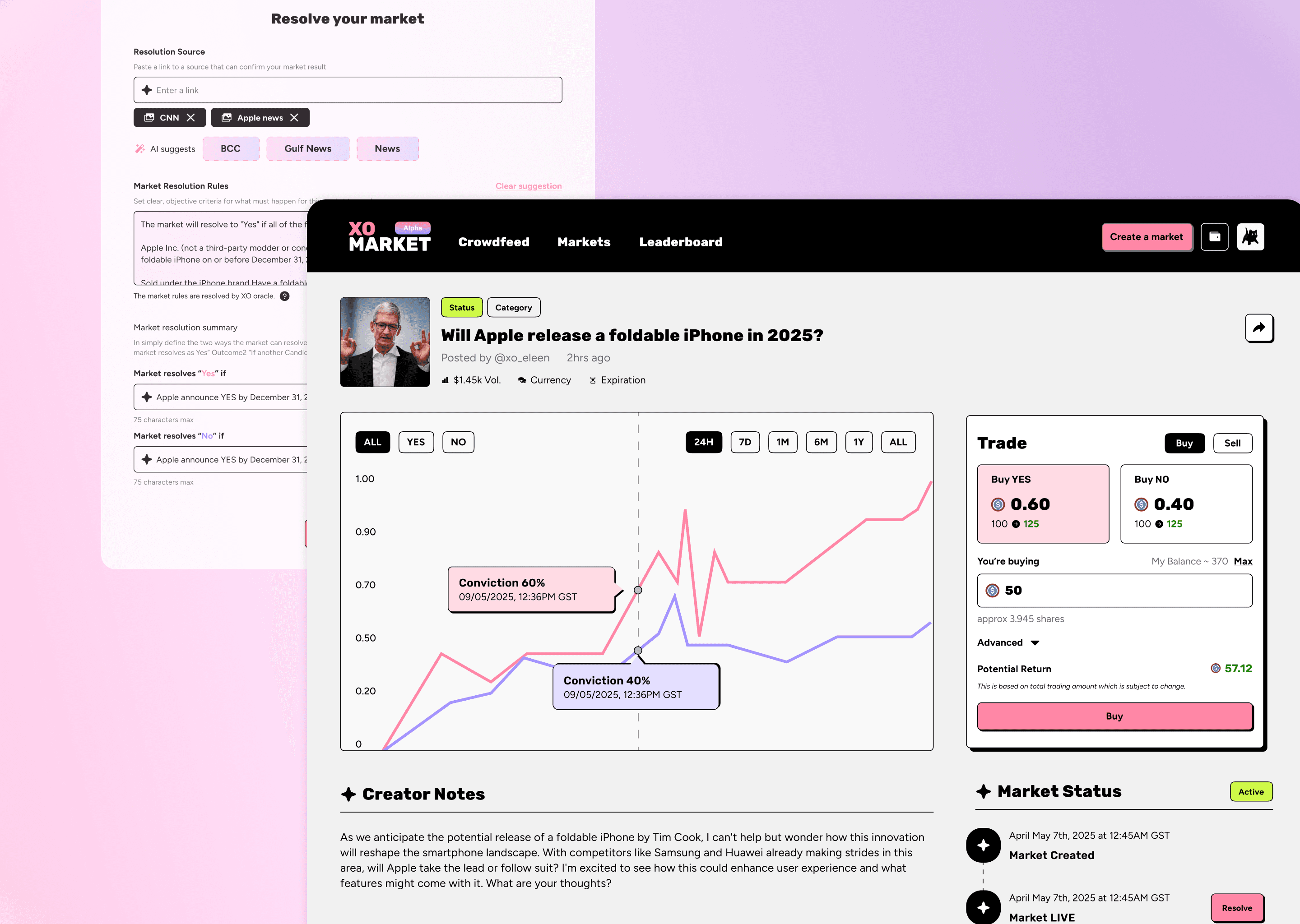
XO.Market is a community-driven, permission-less 'conviction' market platform build in a high-speed, early-stage environment.
Entering a space dominated by big players like Polymarket and Kalshi, XO's goal was to differentiate itself by allowing broader market creation and community participation opportunities while maintaining trust and clarity.
Prediction markets in web3 often assume a high level of technical and financial literacy which differs from web2-user expectations. So, the main challenge was to translate web3-native mechanics into a non-intimidating, understandable experience for new joiners by reducing onboarding friction and maintaining a transparent yet engaging experience.
Key Outputs
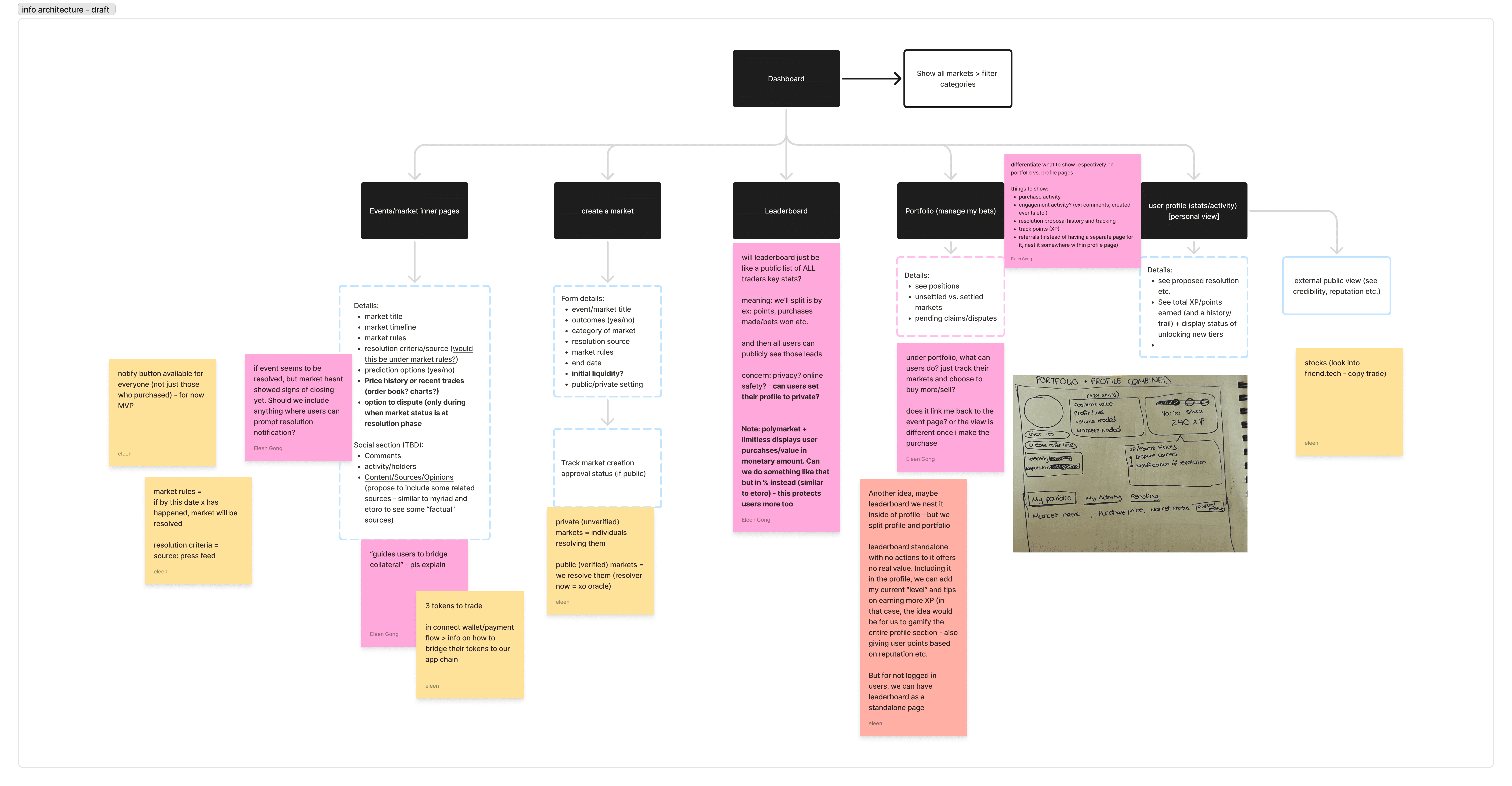
Initial definition of all core flows and actions each page needed to support. This helped us with feature planning and development capacity.
Scalable, variable design system to support delivery speed and consistent patterns and usage rules.
Impact
Accelerated Alpha launch through streamlining concept-to-alignment process, and design system supported delivery speed.
Within the first month of Alpha launch. Strong early adoption, positive feedback across social media, and engaged community discussions helped shape upcoming product roadmap
with 90% of creators using AI assistant within the first hour of market creation feature release. High community noise around this feature release.
Building the foundations
Defining the product
Competitor benchmarking
Cross-analyzed 7 existing prediction platforms to understand common patterns, USPs, gaps, and friction points. These insights informed feature prioritizations and product positioning.
Concept testing
Used Cursor and AI tools to rapidly visualize, test, and validate concepts which accelerated stakeholder alignment and helped build clearer product narratives.
UX Goals
01
Reduce cognitive load to overwhelming details. Ensure core interactions are predictable and adaptable to different user groups, empowering users to have control over their experience.
02
Build trust with users through consistent visual and behavioral language, enabling more confidence towards interacting with the platform independently.
03
Balance UX quality with technical feasibility. Maintaining transparency with users about any limitations so that users are always in the loop for what to expect.
Building the Design System
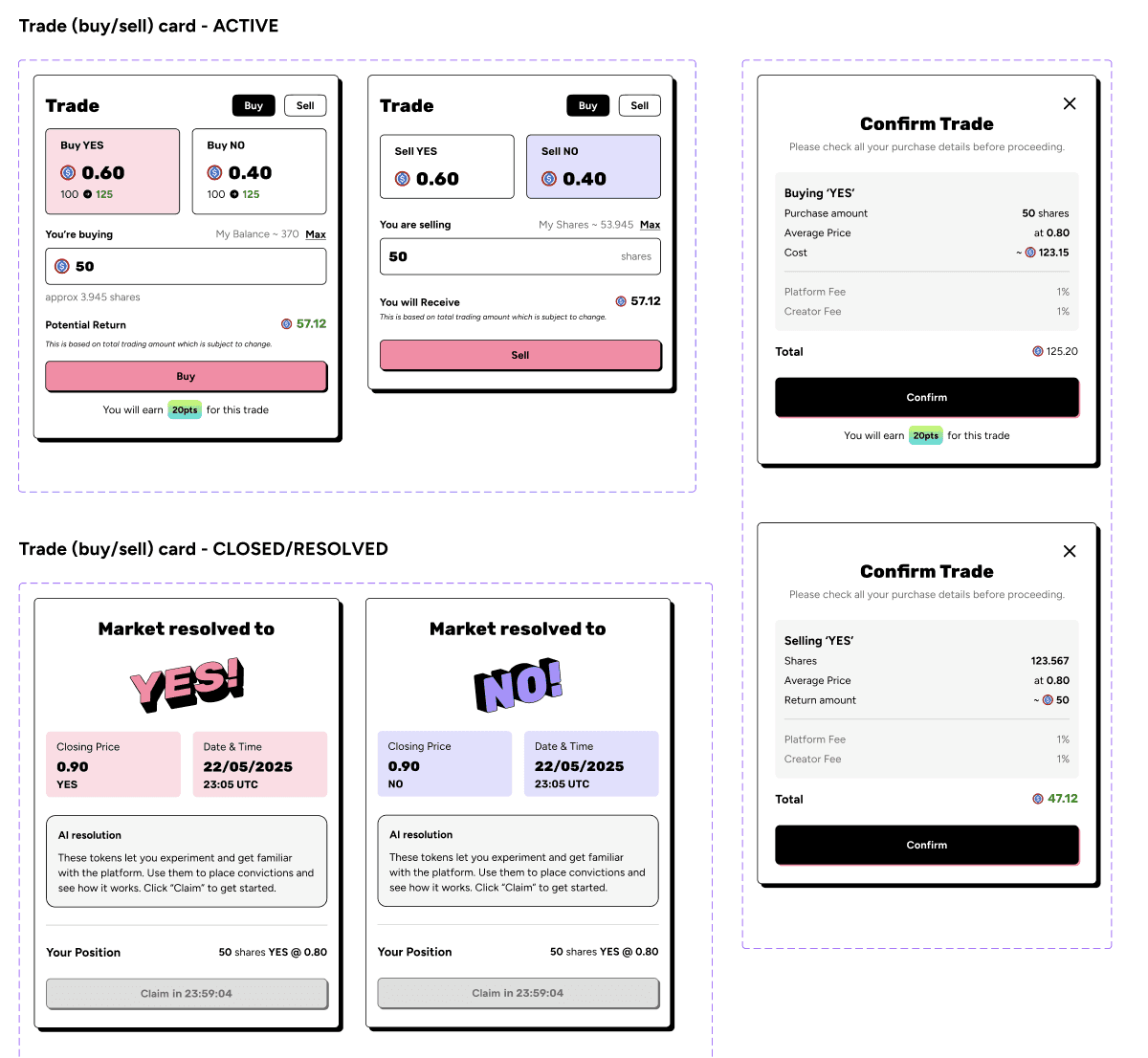
To support key product goals and development speed, I built a modular design system with flexibility and scale in mind.
This design system defined the core components, screen-level guidelines, and semantic color usage to differentiate statuses, CTA's, and AI-specific features. The system also included typography, variables, and theming, enabling learnable associations, faster iteration, and flexibility for scaling the future product.
Design system overview
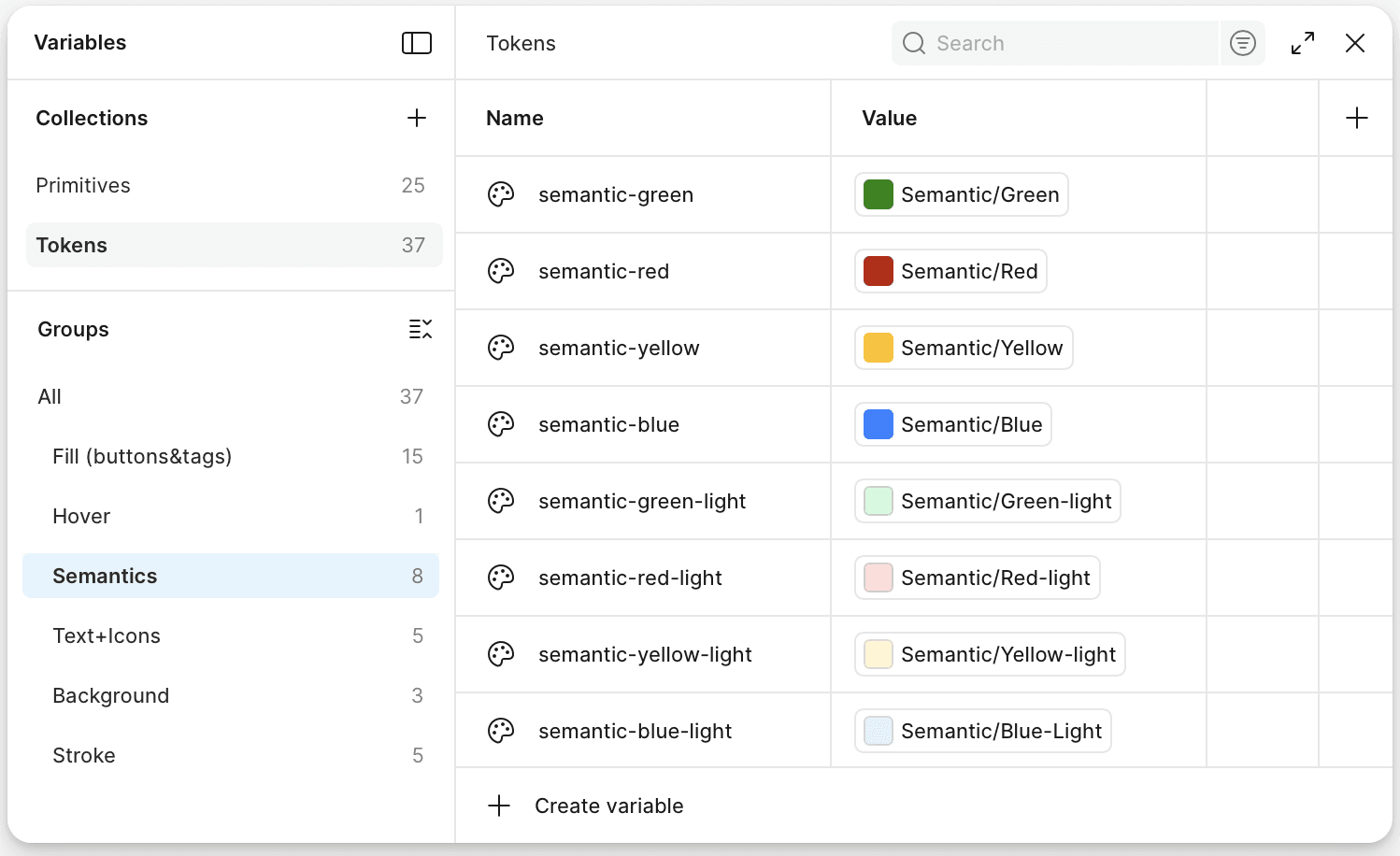
Variables
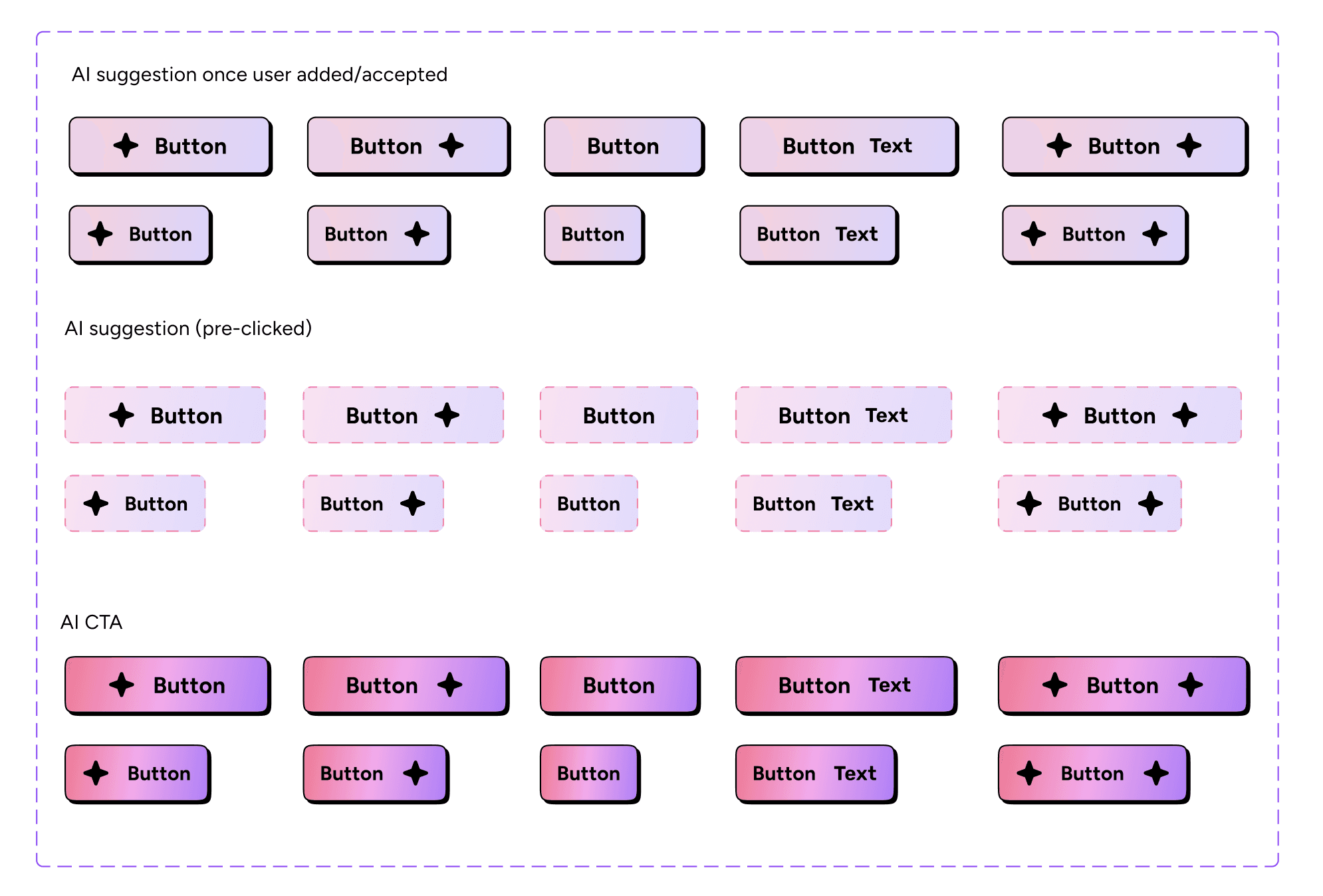
AI-specific components
Functional components
How designs communicated the goals

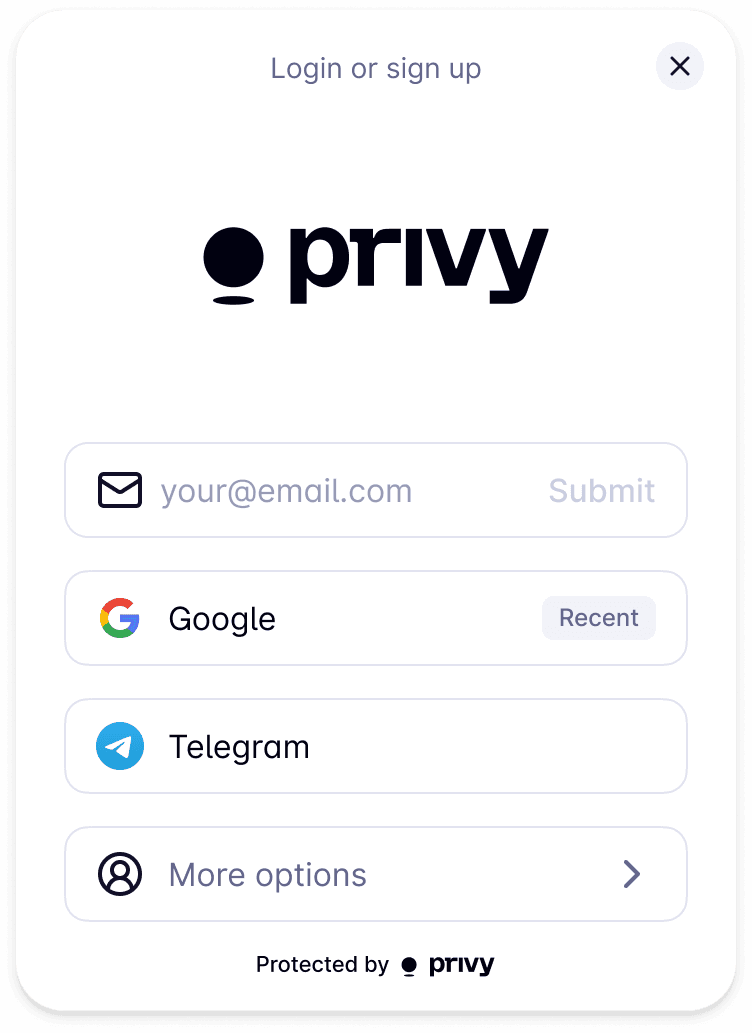
Simplified onboarding
Integration with 3rd-party Privy wallet as a layer that allow users to interact with web3 products without setting up a crypto wallet. By reducing the technical requirements, we encourage more users to explore the space with confidence.
Social feed exploration
Combining social interactions with market participation to increase user engagement, reinforce "conviction"-driven behavior, and makes trading more approachable for new users. Building on top of already familiar patterns.
AI assisted creation
Low-friction AI-supported market creation workflow simplifies complex market creation for all-level users, increases UGC quality, and reduce manual verification.
Community engagement
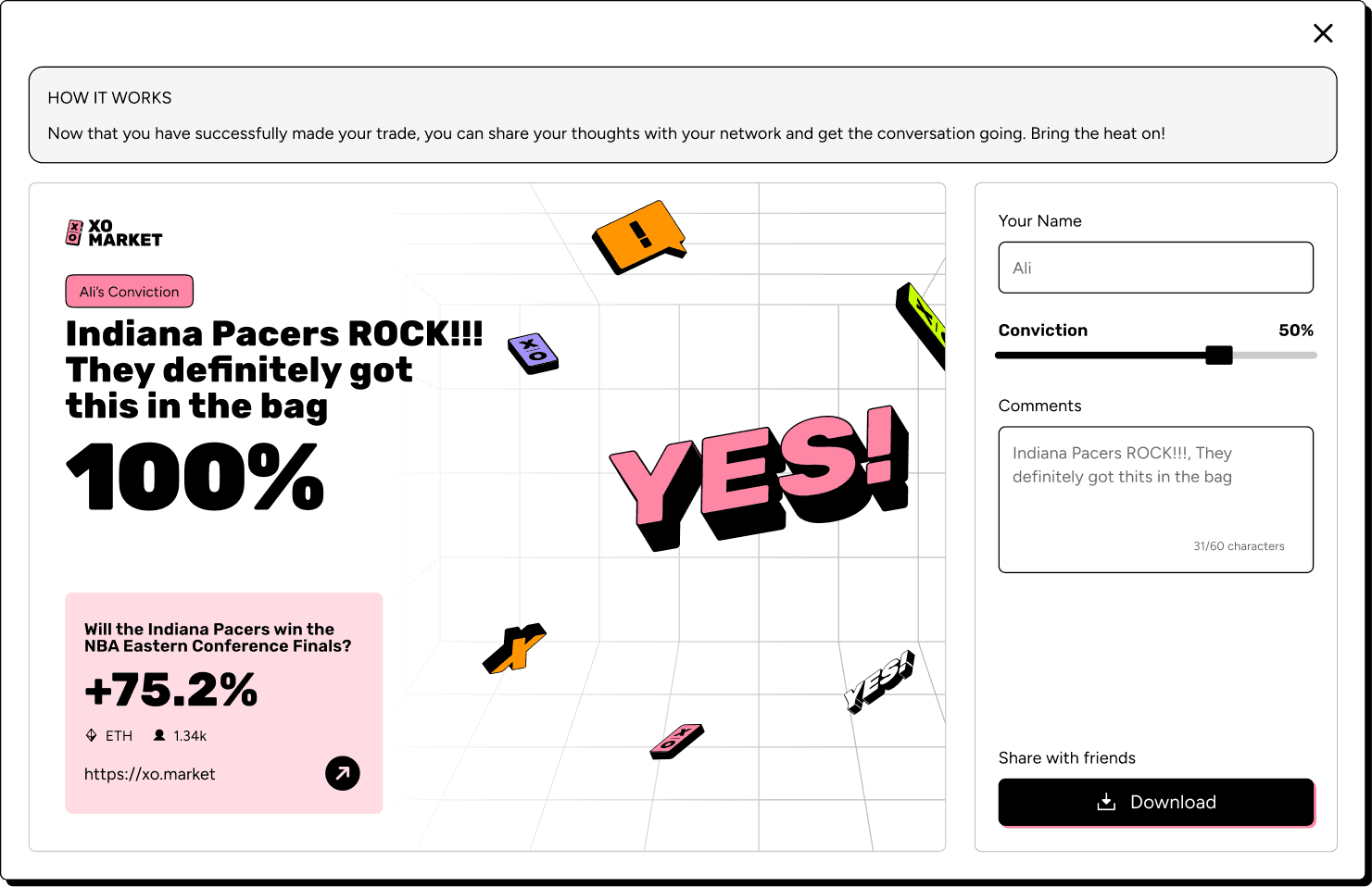
Share component gamifies participation by letting users showcase their conviction and engage their networks, reinforcing community and platform growth.
Community-driven feedback loop
Rather than upfront validation, the product evolved through a community-driven feedback loop. Features were tested with internal team before phased releases, then upon release we were able to gather real-world feedback through our social channels to inform upcoming roadmaps.
Copyright @ EG